
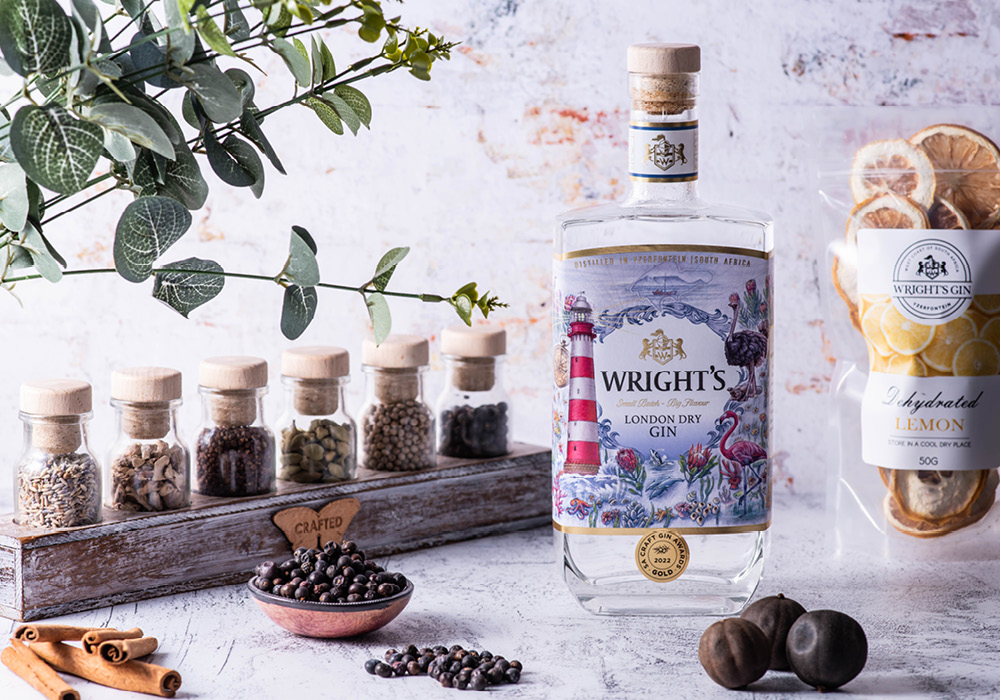
In this edition of our blog, we delve into the fascinating world of gin and explore the intricacies of the distillation process. Join us on a journey to uncover the secrets behind the art of craft gin-making. Wright’s Distillery is nestled away in Yzerfontein, just a short drive from Cape Town, and this is where we craft our bold, and beautifully balanced gin from.
At the heart of every gin lies the art of distillation. Distillation is the process that transforms a simple combination of botanicals and neutral spirits into the beloved spirit we know as gin. While there are various styles of gin, the distillation process remains the foundation upon which all gin is crafted.
Craft gin-making is a labour of love, combining traditional techniques with innovative approaches to create unique and distinctive flavours. Here are the key steps involved in the craft gin-making process:
The craft gin movement has experienced a renaissance in recent years, with small-batch distillers pushing boundaries and creating innovative flavour profiles. The passion and dedication of these artisans have resulted in a plethora of gins that cater to a wide range of tastes, from classic London Dry styles to contemporary gins infused with exotic botanicals.
Next time you savour a gin cocktail or enjoy a gin and tonic, take a moment to appreciate the artistry and craftsmanship behind each sip. Let the botanical symphony on your palate transport you to the world of craft gin-making.
We hope this introduction to the distillation process, and the art of craft gin-making has deepened your understanding and appreciation of this beloved spirit. Stay tuned for more gin-related adventures in our future blog posts.
Cheers to you from the Wright’s Gin Family,
Tamryn Wright